
Executive Director's Message
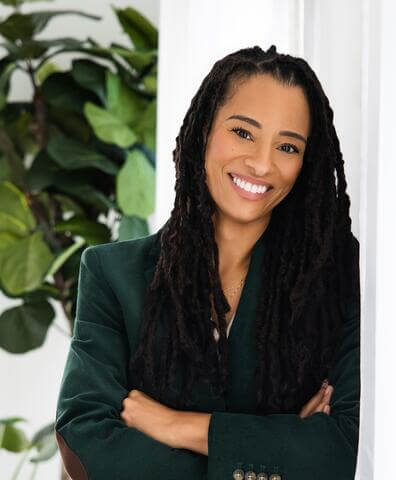
As we approach five years since our Center's inauguration on October 20, 2021, I am immensely proud and honored to part of a powerful group of women leaders at Howard. I want to say thank you to the students, faculty, staff, alumni and partners who are continuing to build the Center. We exist because of you. I also want to thank our allies who are actively committed to improving the lives of women across our campus and beyond. We will continue to need your support now more than ever!
When it was founded, the Center was created to support rigorous research, thought leadership, and leadership development that meaningfully shape the lives of women around the world. That mission has not changed, but the world around us is changing rapidly, creating new challenges for women and raising important questions about rights, opportunity, and autonomy. The women of Howard University have a strong tradition of remaining steadfast and resolute in our pursuit of justice and fairness, all while leading with integrity and care. CWGGL is the culmination of the legacy and we will move it forward.
Our founding director Professor J. Jarpa Dawuni set an expectation that CWGGL would RISE to every moment and she challenged us to ground our work in the values embedded in Resilience, Integrity, Service and Excellence. I will continue to build our community and expand our work in that spirit.
First, we are amplifying faculty and graduate student research that pushes boundaries, interrogates power, and builds new knowledge across disciplines. Our goal is to elevate the intellectual labor happening at Howard and give it the visibility, infrastructure, and global reach. That means strengthening our working paper series, supporting publication pipelines, and continue developing interdisciplinary networks that place our scholars at the center, not the margins, of global conversations on women and gender.
Second, we are deepening our thought leadership. We will continue to host conversations that challenge orthodox thinking and bring together voices across the African diaspora and global South. We will continue to interrogate power and its connections to gender, justice, and leadership.
Third, we are building leadership development pathways for our students. Howard students are already driving change; our job is to prepare them for a world transformed by technology, geopolitical shifts, and new forms of inequality. We are also incorporating strategies that support healing, recognizing that effective leadership requires practices that protect health, boundaries, and long-term sustainability. Resilience should not have to come at the cost of our health and well-being.
And finally, we are strengthening global solidarity. Whether the issue is health, climate, technology, economic insecurity, or political representation, women around the world face interconnected and compounding challenges. The Center will deepen partnerships that link our work with global movements, feminist organizations, and institutions committed to equity and justice.
One area of particular interest to me, which cuts across all four domains mentioned above, stands at the intersection of gender, ethics, justice, and technology. The stakes for women—access, safety, economic opportunity or exclusion, representation, governance—are high. Technology, artificial intelligence in particular, is reshaping labor, politics, culture, and identity. The Center intends to be a leader in shaping the discussions of how Black women challenge, engage and transform digital worlds.
Again, on behalf of CWGGL, we thank you for your support. Our door is always open to those who are serious about women's empowerment, equality, justice and transformative leadership.
Warm regards,
Anita Plummer, Ph.D.
Executive Director
Center for Women, Gender & Global Leadership
Associate Professor, African Studies
Howard University